Wine — Classification
The Wine dataset (178 samples, 13 chemical features, 3 cultivars) is a higher-dimensional classification example than iris. This tutorial trains a map, checks convergence, and reads the structure through the U-matrix, hit map, classification map, and component planes.
Note
Full runnable notebook: notebooks/wine.ipynb. The figures below are its outputs.
1. Load and standardize the data
The 13 chemical features span very different scales, so standardizing is essential before the BMU search compares raw feature distances.
import torch
from sklearn.datasets import load_wine
from sklearn.preprocessing import StandardScaler

bunch = load_wine()
features = torch.tensor(
    StandardScaler().fit_transform(bunch.data), dtype=torch.float32
)
targets = torch.tensor(bunch.target, dtype=torch.long)   # 0, 1, 2
feature_names = list(bunch.feature_names)
2. Train the SOM
from torchsom import SOM

som = SOM(
    x=25,
    y=15,
    num_features=features.shape[1],
    epochs=100,
    batch_size=16,
    sigma=1.45,
    learning_rate=0.95,
    neighborhood_order=3,
    topology="rectangular",
    initialization_mode="pca",
    random_seed=42,
)
som.initialize_weights(data=features, mode=som.initialization_mode)
q_errors, t_errors = som.fit(data=features)
3. Check convergence
from torchsom import SOMVisualizer

viz = SOMVisualizer(som=som)
viz.plot_training_errors(
    quantization_errors=q_errors, topographic_errors=t_errors
)
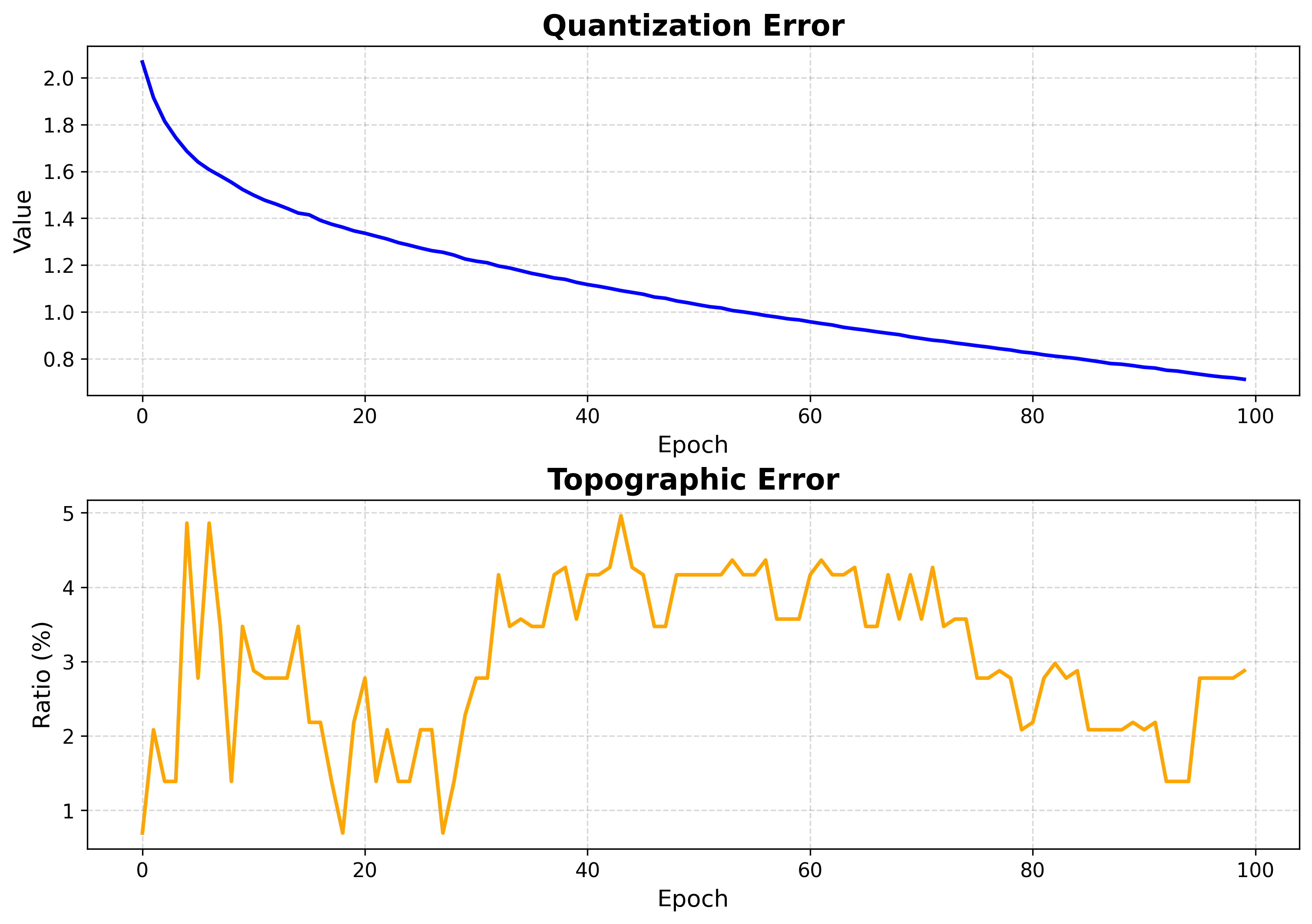
Both errors fall and flatten — training is long enough.
4. Inspect the map structure
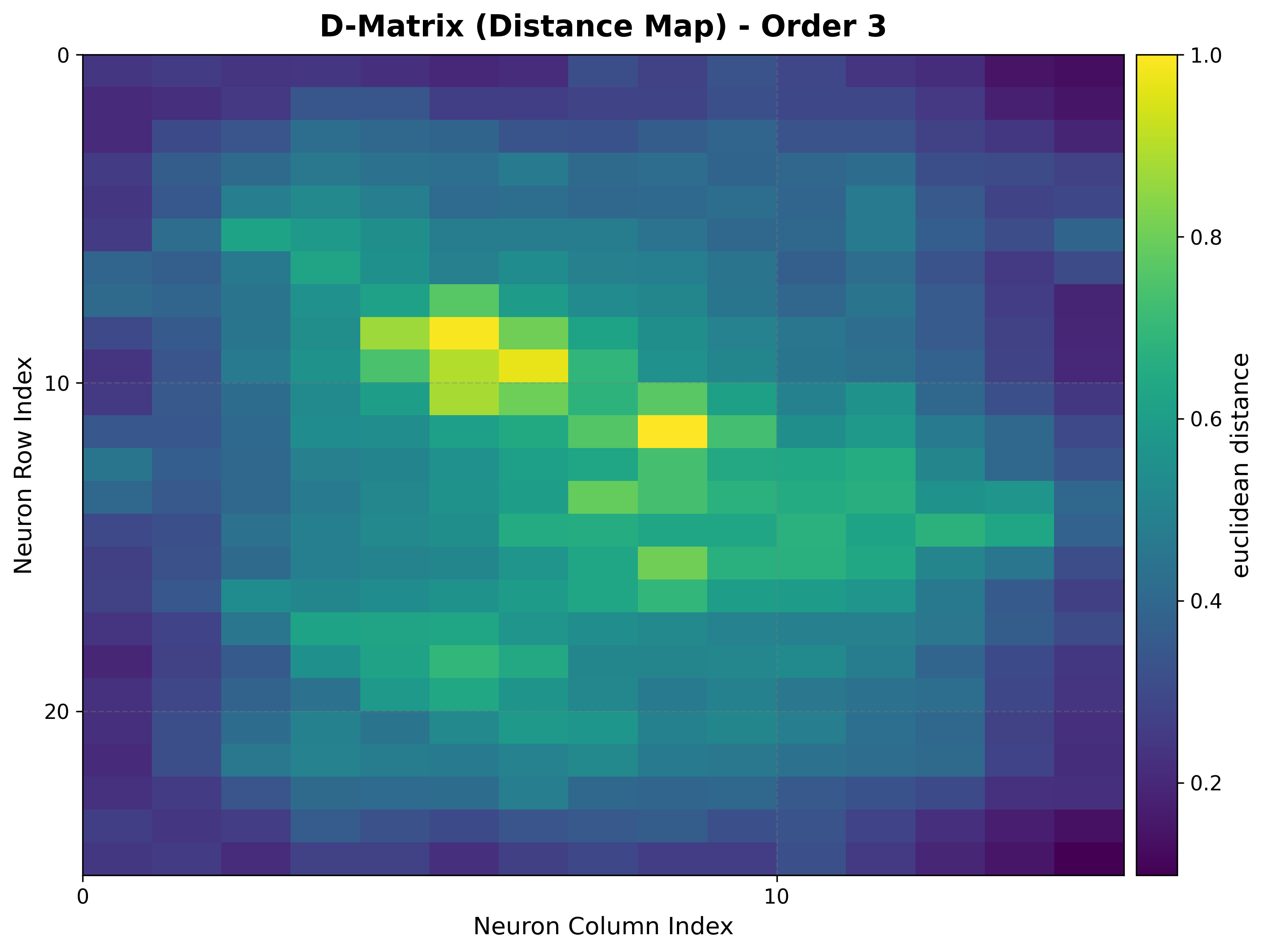
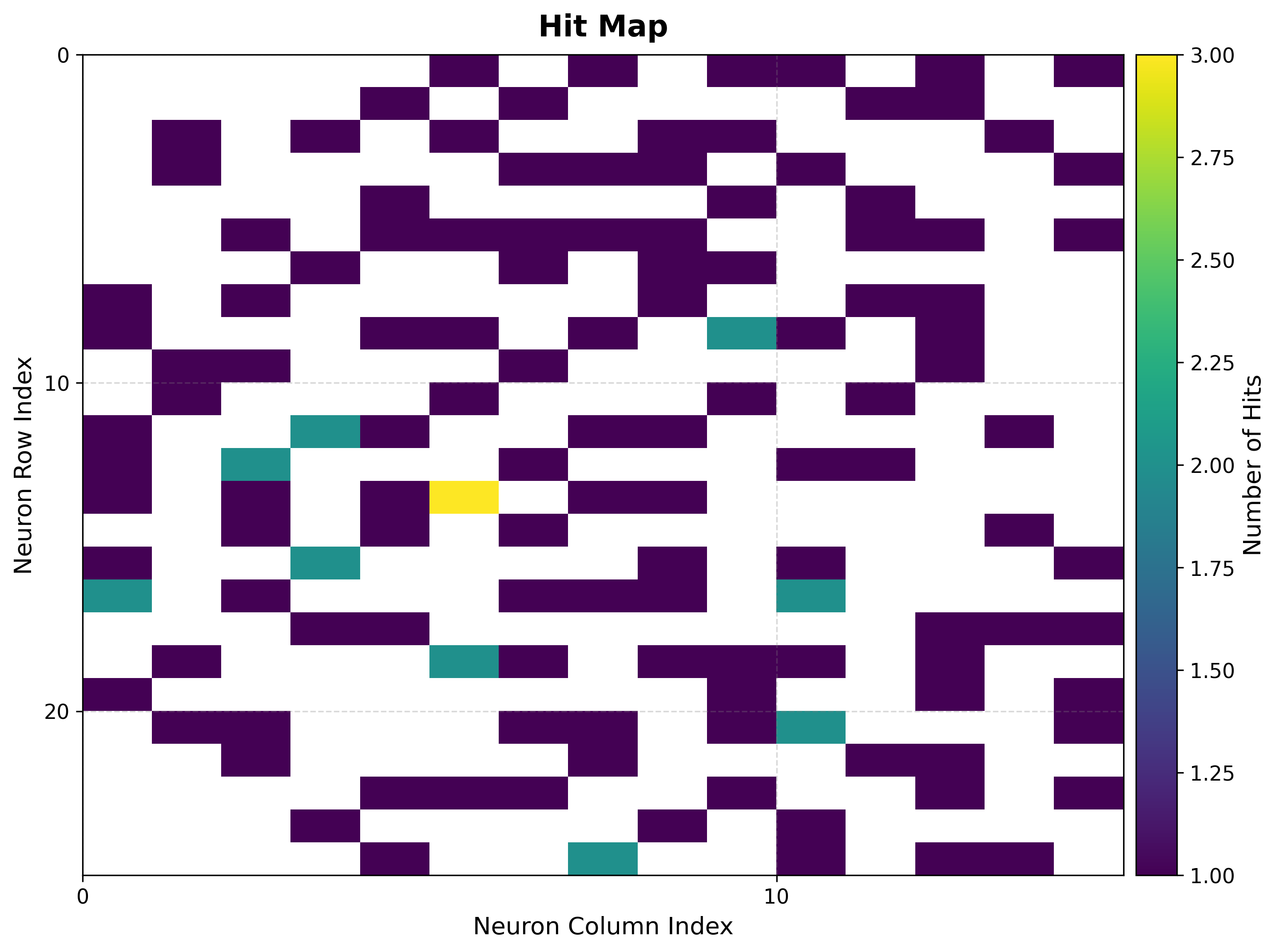
The U-matrix exposes cluster boundaries; the hit map shows where the data lands.
viz.plot_distance_map(
    distance_metric=som.distance_fn_name,
    neighborhood_order=som.neighborhood_order,
)
viz.plot_hit_map(data=features)
|
|
5. Classification map
Build the BMU→sample map once, then color each neuron by its dominant class.
bmus_map = som.build_map("bmus_data", data=features)
viz.plot_classification_map(
    bmus_data_map=bmus_map,
    data=features,
    target=targets,
    neighborhood_order=som.neighborhood_order,
)
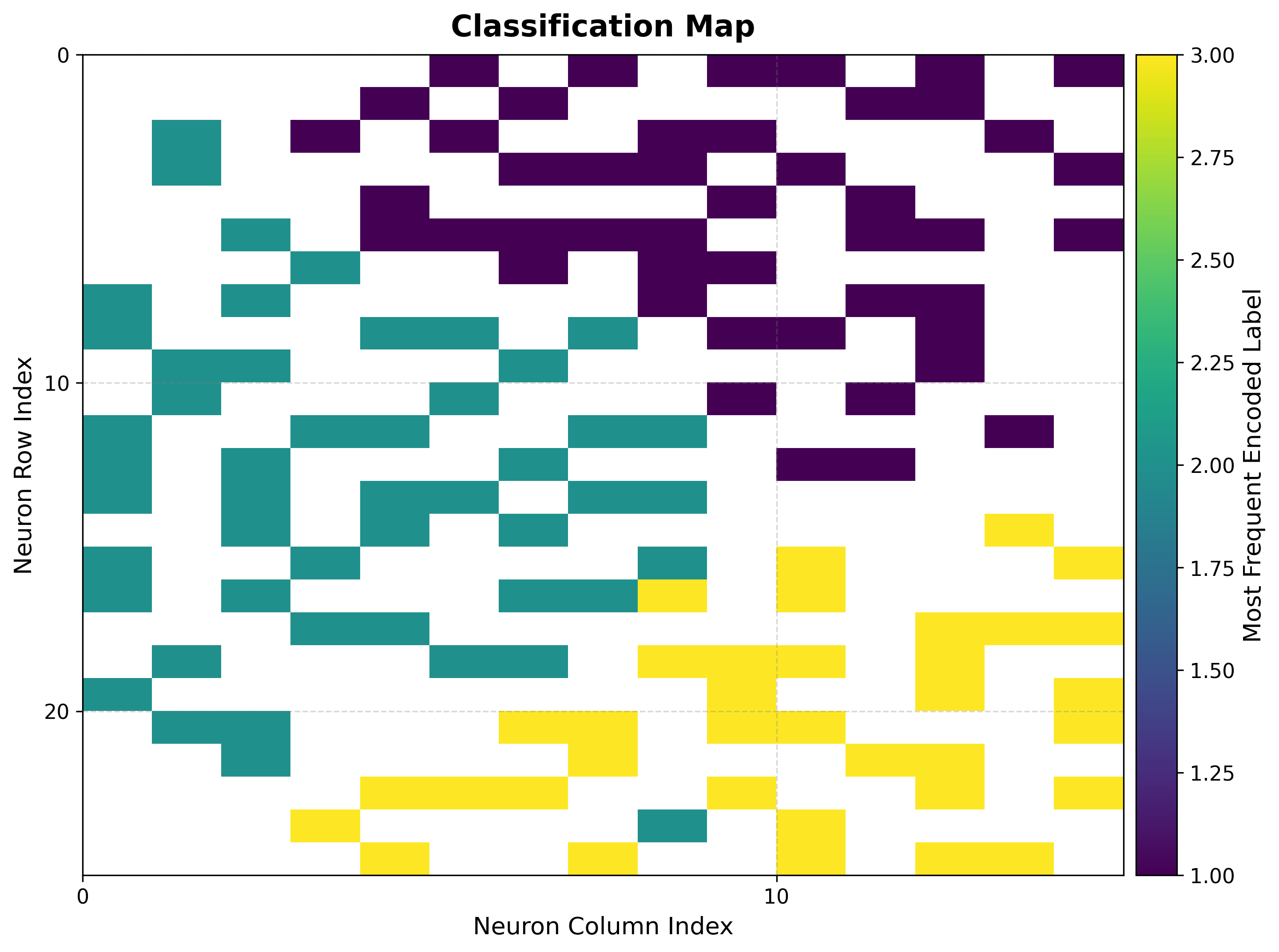
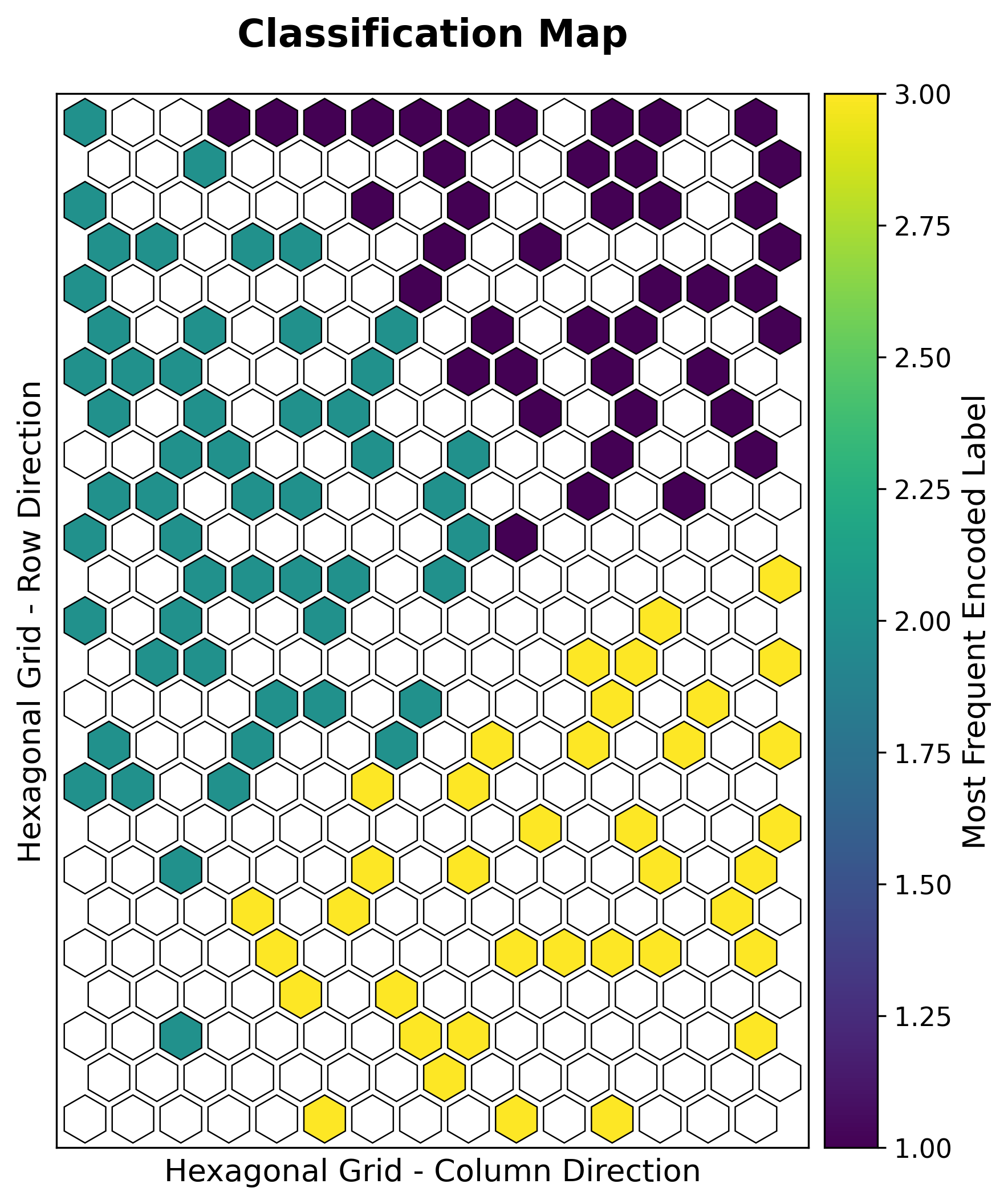
The three cultivars occupy distinct regions of the grid. The 13 features give a clearer 3-class separation than iris, with little overlap between the classes.
6. Component planes
One heat map per feature reveals which features drive the separation. With 13 features there is one plane per feature; see the notebook for the full set.
viz.plot_component_planes(component_names=feature_names)
The planes that vary together across the grid and align with the class regions are the most discriminative chemical measurements.
Hexagonal variant
Set topology="hexagonal" for the same analysis on a hexagonal grid; the visualizer
renders hexagon cells automatically:
Next steps
Iris — Classification — The classic first SOM classification example
Boston Housing — Regression — From classification to regression
Visualization Gallery — Every plot explained